 2 Kallang Pudding




AIRCON PORTFOLIO
Aircon Gas Leak Repair: Media Cassette Type at 337 Beach Rd, Sichuan Tianfu Restaurant
📍Project Location
337 Beach Rd
🏠 Property Type
Shop Houses
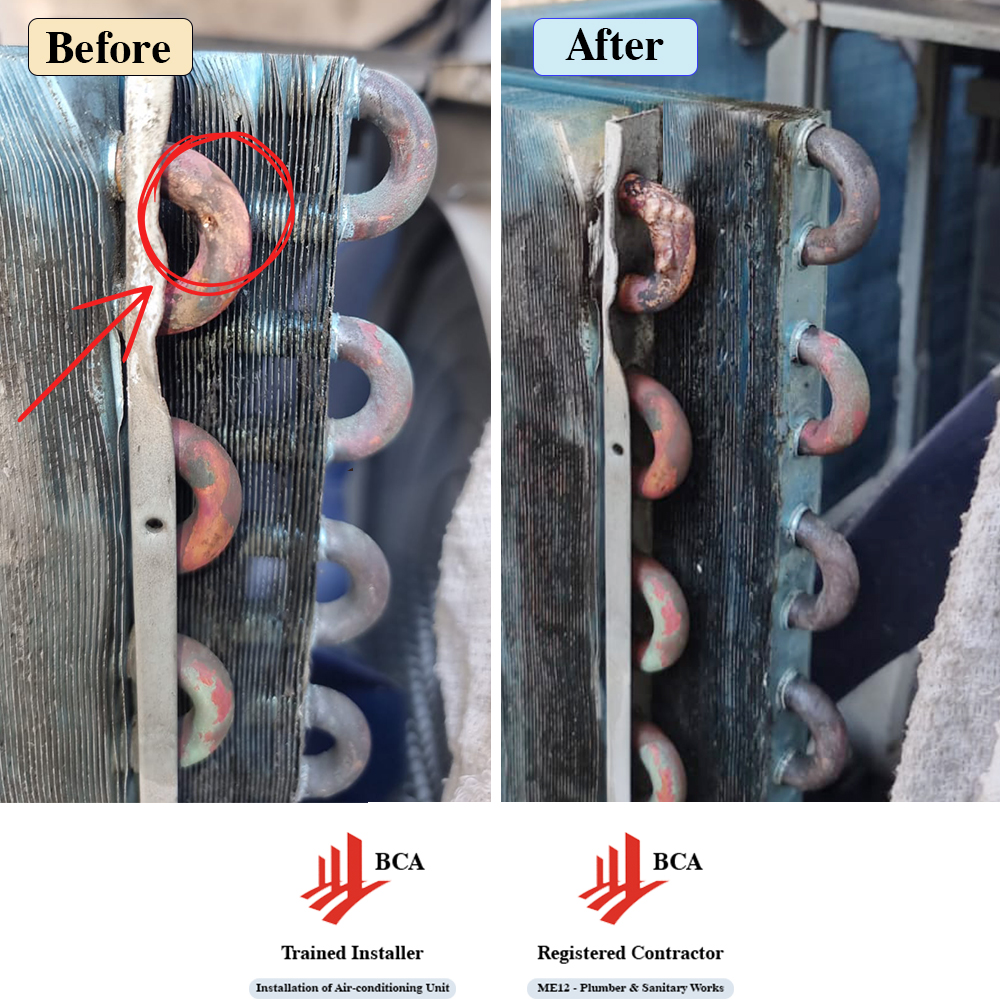
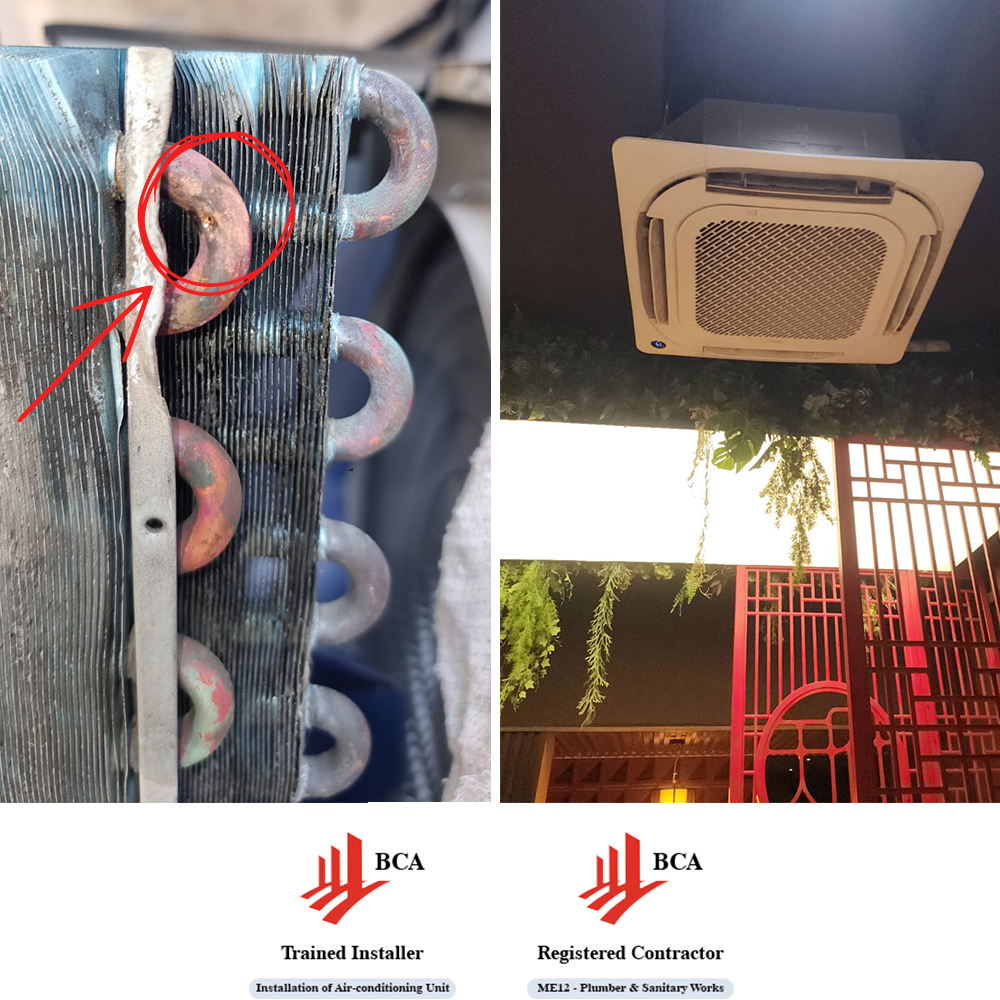
A shop owner faced an issue with their media cassette-type air-conditioning unit not cooling and contacted Homeone for assistance. Upon conducting a site assessment, our technicians traced the problem to a leaking point in the CU refrigerant pipe, which had caused gas loss and reduced cooling efficiency. To restore proper operation, our team carried out a full aircon gas leak repair.
Why Aircon Gas Pipe Leak?
An aircon gas leak usually occurs when copper pipes or coil joints weaken over time due to vibration, corrosion, or poor brazing. Outdoor exposure to heat, rain, and dust causes the copper to expand and contract, forming small cracks or pinholes. In some cases, oxidation inside the pipe—caused by brazing without nitrogen purging—can also lead to internal leaks.
Common signs of an aircon gas leak include weak cooling, hissing or bubbling sounds, ice buildup on copper pipes, and higher electricity bills. When refrigerant gas escapes, cooling performance drops and the compressor is forced to work harder, increasing wear and tear.
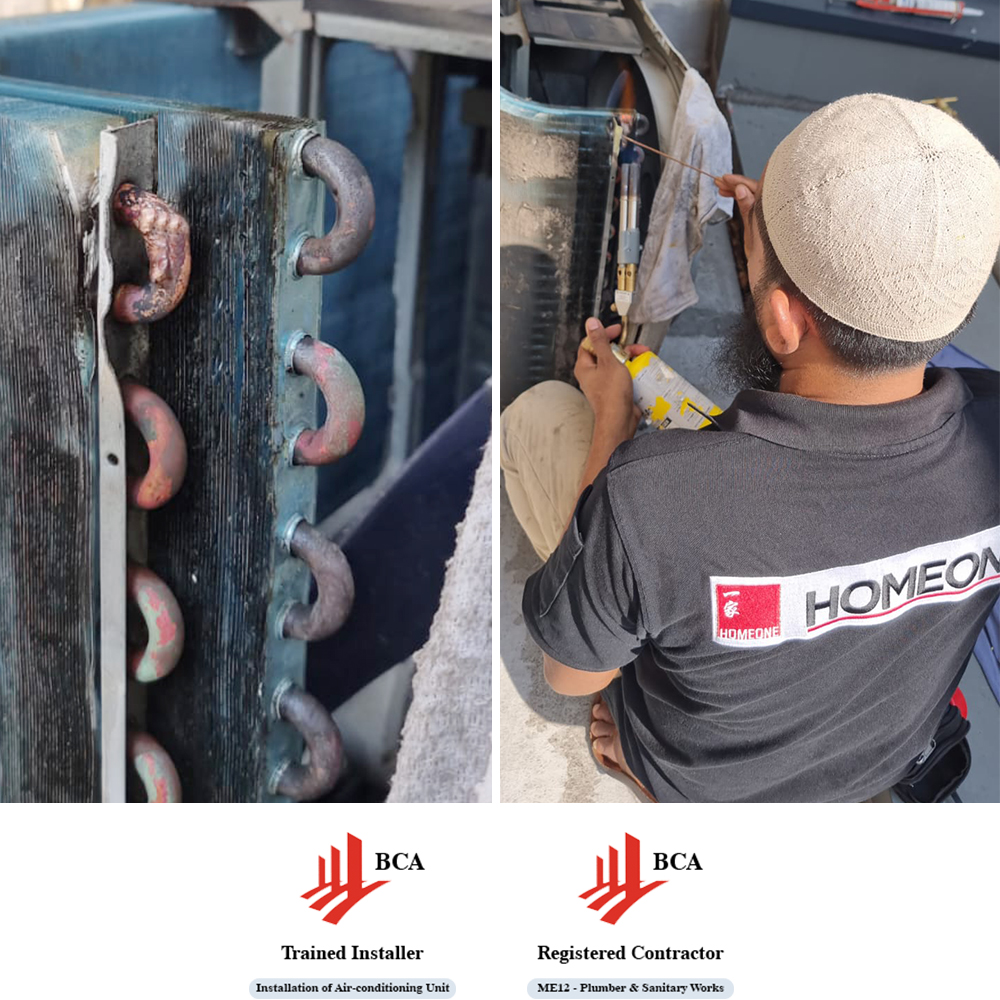
At Homeone, our BCA-trained aircon installers perform thorough leak inspections using advanced gas detector machines. During Aircon Gas Leak Repair, we carry out professional brazing and nitrogen purging to prevent oxidation inside the copper pipes. After sealing, a Nitrogen Pressure Test (400 PSI for 30 minutes) is conducted to ensure there are no further leaks before refilling the refrigerant.
Having a trained aircon installer is crucial — skilled technicians follow proper brazing, purging, and testing procedures to ensure lasting repairs. Professional Aircon Gas Leak Repair ensures safety, efficiency, and long-term system reliability.
BEFORE
AFTER
Aircon CU Model: Media MOU24-CVN11
Aircon FCU Model: Media MCD24-HRFN32E
Aircon Gas Leak Repair Job Scopes:
1. Leak Detection and Confirmation
A pressure test was conducted with a pressure scale, confirming abnormally low refrigerant pressure. A specialised leak detection device was then used to accurately locate the leak point.
2. Welding the CU Leak Point
The identified leak section on the CU refrigerant pipe was welded and sealed.
3. Nitrogen Purging
Nitrogen was purged through the copper pipes during brazing to prevent oxidation and carbon buildup inside the system, ensuring clean and reliable refrigerant flow.
4. Nitrogen Pressure Test (400 PSI for 30 Minutes)
Nitrogen was injected at 400 PSI and held for 30 minutes to ensure no further leaks.
5. Cleaning and Re-jointing the Flaring Connection
The flaring joint was cleaned, re-flared, and reconnected to ensure a tight, reliable seal.
6. Leak Test Verification
Nitrogen test results were checked again to verify successful sealing of the system.
7. Vacuum Process (20 Minutes)
The system was vacuumed for 20 minutes to remove air and moisture.
8. Gas Top-Up
Refrigerant gas was topped up to the correct level (1.95kg) for optimal cooling capacity of this Media MOU24-CVN11.
9. System Analysis
A final system analysis was performed to confirm stable operation and reliable cooling performance.
Conclusion
The aircon gas leak repair was completed by our BCA-trained air-conditioning technicians. Through precise leak detection, proper welding, nitrogen testing, vacuuming, and refrigerant top-up, the system was restored to full working condition. The unit now delivers stable cooling performance.